
From the Yard to the Screen
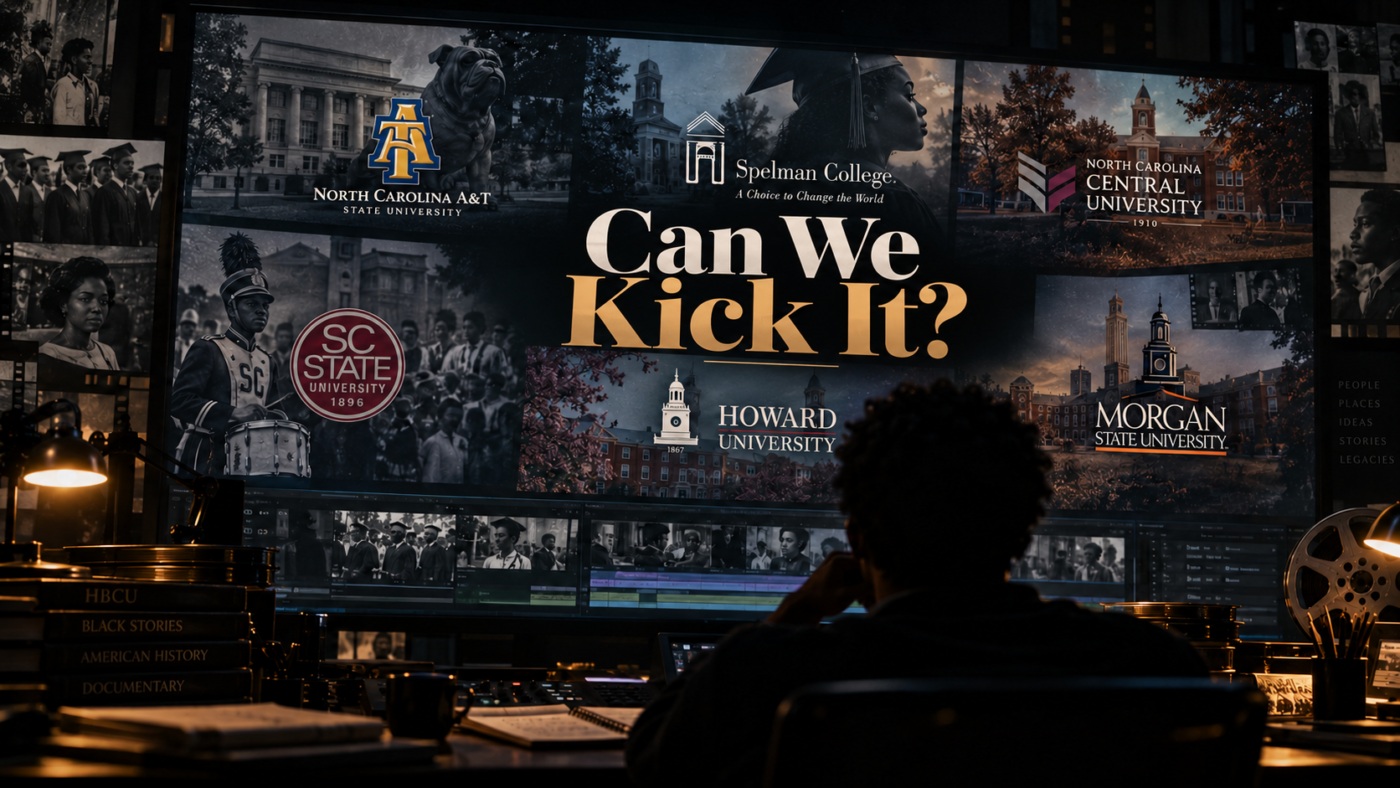
How HBCUs helped shape the people, history, and purpose behind Can We Kick It?
By Akbar Majeed | CWKI Journal
The HBCU connection to Can We Kick It? was never an afterthought.
As a graduate of North Carolina A&T State University, I’ve always understood the importance of historically Black colleges and universities. Not simply as places to earn a degree, but as institutions that have helped shape Black culture, identity, leadership, and the way we tell our own stories.
When we began making Can We Kick It?, I was conscious of that connection. We were exploring American soccer through a lens too often overlooked — the African American experience. Soccer was the subject, but the larger conversation was about history, culture, access, and opportunity.
HBCUs were already part of that story.
The People and the Voices
The connection runs through both the people who made the film and those whose voices help tell its story.
Our producer, Theresa Majeed, is a Spelman College alumna. Ed Harris, one of our directors of photography, attended North Carolina Central University. Marc Langon, a South Carolina State alumnus, and Mario and Sparkle Wimberly, both Howard University alumni, are among the voices featured in the documentary.
Morgan State University’s influence runs particularly deep. Dr. Jared Ball, a Morgan State professor, is interviewed in the film, while our associate producer, Edward Robinson III, is also a professor at the university.
We filmed a number of interviews at Morgan’s School of Global Journalism and Communication, connecting another HBCU directly to the production.
And there’s William C. Rhoden, a distinguished Morgan State alumnus whose reporting for Andscape this summer brought Can We Kick It? into a broader national conversation about American soccer, access, and development.
These connections represent something larger than a collection of alumni affiliations. They reflect the influence of institutions that have spent generations developing people who shape, challenge, and document Black American culture.
The History We Couldn’t Overlook
One of the film’s most important historical chapters is Howard University’s soccer legacy.
Under Coach Lincoln Phillips, Howard challenged perceptions of who belonged at the highest levels of American college soccer. Its championship teams of the 1970s represented more than athletic success. They were part of a larger story about Black excellence and representation in a sport rarely associated with Black American institutions.
Having Coach Phillips share that history in Can We Kick It? was important to me.
This summer, when we returned to Morgan State for a screening in Baltimore, Coach Phillips saw the completed film for the first time. He told us we had done an excellent job and shared his belief that, just as Pelé elevated the game, Can We Kick It? could help take the conversation to another level.
Hearing that from someone who helped make the history we were documenting meant so much.
Coming Home
Now, as we prepare to bring Can We Kick It? to Greensboro during North Carolina A&T’s Greatest Homecoming on Earth, the journey takes on a particularly personal meaning.
Returning to the community where I attended college with a film that reflects years of work is special. But it’s also an opportunity to recognize the institutions and people who helped shape this story.
HBCUs have never been simply a footnote in Black American sports and culture. Their influence extends through generations of athletes, educators, journalists, filmmakers, and storytellers.
Can We Kick It? is another example of that influence.
When I look at this film, I see more than a documentary about soccer. I see the impact of institutions that have helped develop talent, preserve history, and create opportunities for Black voices to be heard.
That influence didn’t begin when we started filming, and it won’t end when the credits roll.
From the yard to the screen, the legacy continues.
Akbar Majeed is the creator and director of Can We Kick It? and founder of Concrete2Green, a creative studio exploring the intersection of sport, culture, and community. His work examines who shapes the game, who gets seen, and the stories that deserve a larger platform.
Comments are closed.