
The World Came. Now What Do We Build?
The World Cup gave America a moment. The question is what remains after the cameras, campaigns and content move on.
For more than a month, soccer was everywhere.
It filled bars, museums, public plazas, television studios and social feeds. Flags hung from car windows. Jerseys appeared at cookouts, offices, train stations and block parties. Families carried pieces of Haiti, Morocco, Cape Verde, Brazil, Argentina, Mexico, Ghana and dozens of other places into the streets.
The World Cup reminded us that soccer is never only a game.
It is migration and memory. Fashion and music. Politics, family, neighborhood and belonging.
This time, the world came here.
And once it arrived, nearly everyone wanted a piece of it.
Brands that had rarely mentioned soccer launched campaigns. Companies hosted watch parties and cultural activations. Agencies discovered “football culture.” Influencers became correspondents. Celebrities appeared in jerseys. Creators who had spent little time discussing the sport began producing match reactions, rankings, explainers and tournament content.
There were pop-ups, capsule collections, panels, commercials and branded experiences designed to show that everybody understood the culture.
Some of that attention was welcome.
New people found the game. New voices entered the conversation. Artists, filmmakers, designers and storytellers interpreted the tournament through their own experiences. Soccer should not belong only to those who can prove how long they have followed it.
Culture grows when people are invited in.
But there is a difference between joining a culture and temporarily borrowing one.
There is a difference between creating content around a moment and committing to the people who sustained that culture before the moment became profitable.
That is the question now.
Not who posted during the World Cup.
Who will still be here afterward?
The Culture Was Already Here
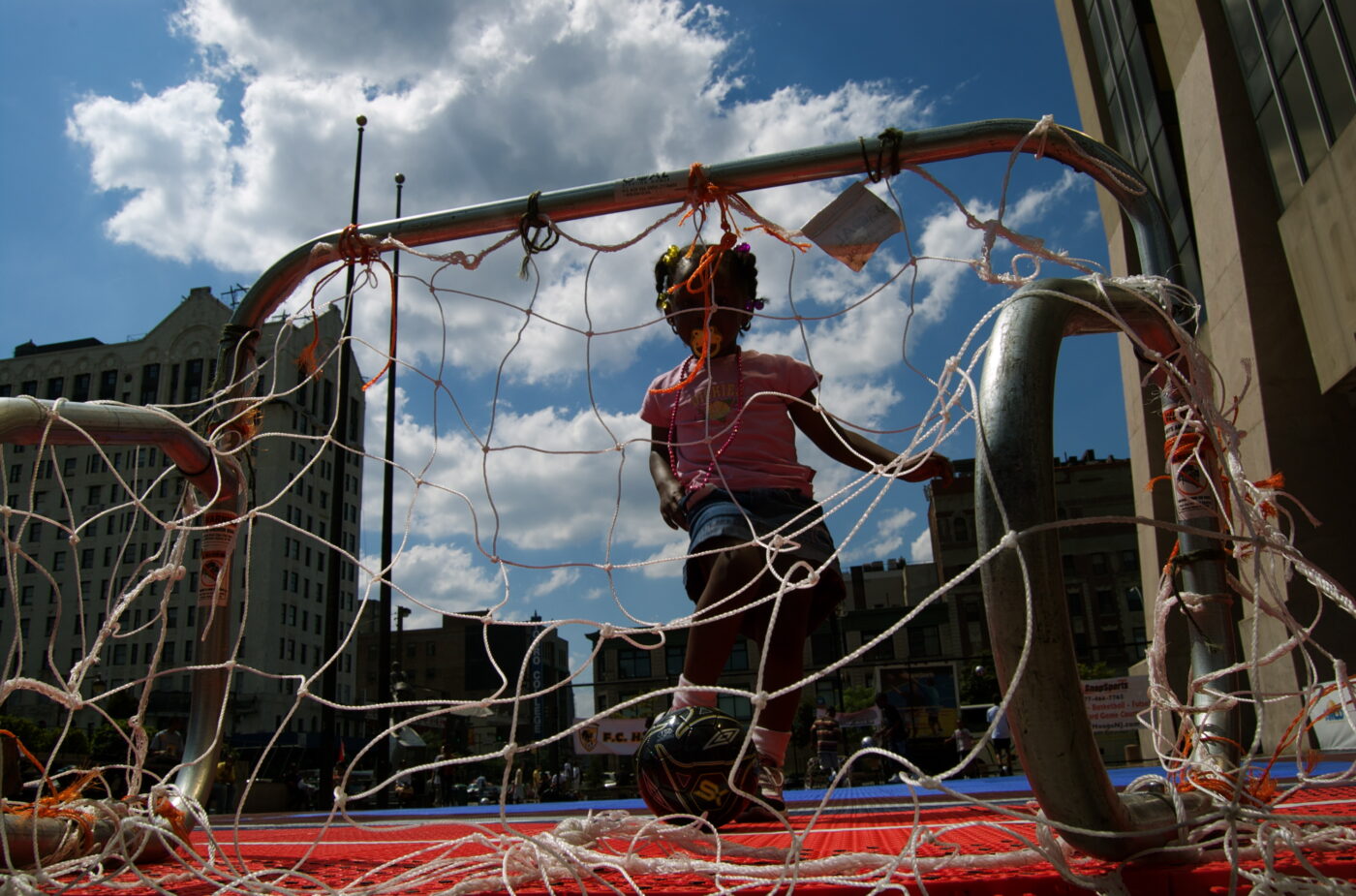
Soccer did not suddenly arrive in Black and brown communities because the World Cup came to North America.
It was already being played in apartment courtyards, public parks, schoolyards and recreation centers. It traveled through immigrant neighborhoods and across generations. It lived in Caribbean social clubs, African restaurants, Latin American barbershops and family group chats connecting people across continents.
It existed anywhere someone found enough space to place two objects on the ground and call them a goal.
The culture was already here.
What was missing was not interest.
It was recognition.
It was sustained investment, accessible infrastructure, media attention and pathways connecting the talent inside communities to the institutions controlling the game.
That tension has always been at the center of Can We Kick It?
The film was never created to prove that soccer could become popular in America. The rest of the world answered that question generations ago.
It was created to ask something more difficult:
Who has America allowed to participate in the future of the game—and who has it repeatedly left standing outside the gate?
When the Lights Came Back On
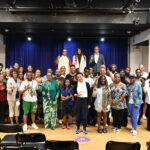
As the tournament unfolded, we took Can We Kick It? into theaters and cultural spaces in Harlem, Charlotte and Philadelphia.
We watched the film with former players, journalists, artists, organizers, educators, families and people who may not have considered themselves traditional soccer supporters.
Each room carried a different history.
Each city had its own relationship to the game.
But when the lights came back on, the conversations kept arriving at the same questions:
What do you want to happen because of this film?
What are people supposed to do next?
Those may be the most important questions we received.
The most meaningful part of a screening does not always happen on the screen. Sometimes it begins after the credits, when people recognize pieces of their own lives in the story and begin imagining what could exist beyond it.
The audience did not simply want to discuss why the American system had failed to reach certain communities.
People wanted to talk about fields.
Schools.
Coaches.
Transportation.
Cost.
Ownership.
History.
They wanted to know why children could grow up surrounded by basketball courts yet struggle to find a safe and accessible place to play soccer.
They wanted to know why the sport could market itself through Black music, fashion and creativity while remaining disconnected from many of the communities producing that culture.
They wanted to know what it would take to build something different.
Attention Is Not Infrastructure
The World Cup proved that America knows how to create spectacle.
It knows how to sell tickets, secure sponsorships, build stages and turn a global event into a content engine.
But spectacle and infrastructure are not the same thing.
A viral campaign cannot replace a field.
A branded watch party cannot replace a neighborhood program.
A celebrity wearing a jersey cannot replace an affordable pathway for a talented child.
A month of soccer content cannot repair decades of disconnection.
Culture is not a campaign. It cannot be switched on for a tournament, packaged for a season and abandoned when the attention moves elsewhere.
That does not mean the campaigns, creators or celebrations had no value. Their value should be measured by what remains after the moment passes.
Did the activation create a lasting relationship with the community, or merely use the community as a backdrop?
Did the campaign support people who had already been doing the work?
Did the organization invest in anything that will still exist next year?
Did the creator remain curious once the engagement numbers declined?
Did the institution learn anything about the culture it borrowed?
The concern is not that people jumped onto the bandwagon.
The concern is that the wagon may leave without delivering anything.
The game should welcome new voices, but entering a culture also carries responsibility.
Come to the game.
Create around it.
Celebrate it.
But learn the history.
Acknowledge the communities.
Share resources.
Build relationships.
Stay after the tournament.
From a Film to Something More
Can We Kick It? began as a documentary, but the questions surrounding it cannot remain inside a film.
A film can reveal a gap. It can recover overlooked history. It can bring people into the same room and give them language for something they have felt but could not always explain.
It cannot build the future by itself.
That requires partnerships, local knowledge, patient work and people willing to invest beyond the visibility of a major event.
The next phase must include more community screenings and conversations, but it must also move beyond conversation.
It means documenting models that are already working.
It means connecting soccer to education, public space, art, fashion, media and neighborhood development.
It means recognizing that communities are not merely potential consumers of American soccer. They can be designers, storytellers, coaches, executives, owners and builders within it.
It also means developing a real answer for every person who leaves a screening asking:
What can I do?
The answer cannot simply be to watch another piece of content.
The goal must be to turn recognition into relationships, conversation into participation and cultural interest into lasting opportunity.
The World Came. The Work Remains.
The World Cup ended, but the conditions that existed before the opening match did not disappear with the closing ceremony.
The fields did not suddenly become more accessible.
The cost of participation did not suddenly fall.
The pathways did not suddenly become clearer.
The neighborhoods that served as campaign locations did not automatically receive the investment they deserved.
And the creators and organizations telling these stories before the tournament did not suddenly gain equal access to the resources flowing through the game.
That is why this moment matters.
America has now seen what soccer looks like when the entire world brings its history, color, sound and emotion into the same place.
The question is whether we experienced that as visitors—or whether we learned enough to begin building something of our own.
The World Cup gave us spectacle.
The screenings gave us conversation.
The culture gave us the blueprint.
Now comes the part that cannot be completed in a campaign, captured in a reel or finished before the next content cycle begins.
Now we build.
Comments are closed.